Address
304 North Cardinal St.
Dorchester Center, MA 02124
Work Hours
Monday to Friday: 7AM - 7PM
Weekend: 10AM - 5PM

Address
304 North Cardinal St.
Dorchester Center, MA 02124
Work Hours
Monday to Friday: 7AM - 7PM
Weekend: 10AM - 5PM
THE JOURNAL from ASHRAF DENTISTRY

Jaw discomfort can turn everyday pleasures—sharing dinner, laughing with friends, or enjoying breakfast—into uncomfortable experiences. Although commonly called “TMJ pain,” temporomandibular disorders, or TMD, can involve the jaw joints, chewing muscles, or both. Exercises may support recovery, but choosing appropriate movements matters more than completing every exercise. (Source: San Antonio Regional Hospital, 9 Best Exercises for Temporomandibular Joint (TMJ) Pain Relief, https://www.sarh.org/services/rehabilitation-services/9-exercises-for-tmj-pain-relief).
Ashraf Dentistry shares, “Before collecting jaw exercises, collect clues. Does discomfort appear after breakfast, during concentrated work, or following a long conversation? These details help a Yorkville dentist understand your symptoms and recommend dental treatments that fit your daily life.”
Partial goldfish exercises involve a small, controlled opening-and-closing movement rather than a wide stretch.
Ashraf Dentistry explains, “Think of this as practising comfortable movement, rather than chasing flexibility. A mirror can help you notice whether your jaw drifts, but do not force it straight. Bring observations to your appointment. A movement that repeatedly catches or hurts deserves assessment, not extra repetitions.”
A relaxed jaw position generally involves keeping the teeth slightly apart, with the tongue resting gently against the palate.
Ashraf Dentistry comments, “Your teeth do not need to touch while you answer emails or watch television. Try linking a jaw check to an everyday cue, such as opening your inbox. Notice contact, release unnecessary tension, and continue your task. This makes awareness practical without turning your entire day into a monitoring exercise.”
Full-opening goldfish exercises use a larger opening movement. The appropriate range should be comfortable and individually assessed.
Ashraf Dentistry highlights, “The word ‘full’ should never become a challenge to open farther through pain. Tell your dental team if long appointments tire your jaw. Short breaks and adjustments to appointment pacing may make dental procedures more comfortable. Your ability to tolerate prolonged opening is useful clinical information.”
Chin tucks involve gently drawing the chin backward while keeping the head level. They may form part of a supervised posture programme.
Ashraf Dentistry notes, “Look at where your screen lives. A laptop balanced low on a coffee table encourages a different working position than a screen near eye level. Comfortable workstation adjustments can complement care, but posture is only one consideration. Persistent jaw pain should not be dismissed as simply sitting incorrectly.”
Resisted opening introduces light opposition as the jaw opens. A clinician should determine whether strengthening is appropriate.
Ashraf Dentistry advises, “An uncomfortable muscle does not automatically need a harder workout. Adding resistance without understanding the problem can aggravate symptoms. Ask what the exercise is intended to improve, how much pressure to use, and when to stop. A clear prescription is more useful than an ambitious repetition count.”
Resisted closing applies controlled resistance during closure. Any technique or device should be demonstrated by a dental professional.
Ashraf Dentistry cautions, “Online jaw-training gadgets can make rehabilitation look like a fitness trend. Avoid improvising with objects against your teeth or purchasing resistance equipment before an assessment. The aim is comfortable function. If an exercise leaves chewing or talking more painful afterward, report that response rather than increasing the effort.”
This exercise involves gently moving the lower jaw laterally within a comfortable range.
Ashraf Dentistry observes, “Mention whether you consistently avoid chewing on one side. That habit may reflect jaw discomfort, but it can also signal a sensitive tooth or another dental concern. Assessment at a dental office in Yorkville can help distinguish these possibilities before you try to solve the problem with stretching alone.”
Forward movement involves gently bringing the lower jaw ahead, then returning to its resting position.
Ashraf Dentistry explains, “A movement should have a purpose beyond producing a click. Painless clicking alone often does not require treatment, and repeatedly testing it can become an unnecessary habit. Focus on whether you can eat, speak, and yawn comfortably. Pain, locking, or a changing bite provides more useful information than sound alone.”
Management may include temporary dietary adjustments, heat or cold therapy, physiotherapy, medication when appropriate, and an assessment for an oral appliance.
Ashraf Dentistry shares, “Keep enjoyment in your routine: choose tender meals, cut larger foods into manageable pieces, and pause gum chewing during a flare. A nightguard may protect teeth affected by grinding, although pain relief varies. Botox Therapeutics may be discussed for selected persistent muscle-related symptoms; evidence remains mixed, so benefits, risks, and alternatives deserve careful review.”
Persistent symptoms, painful clicking, or jaw locking warrant professional assessment.
Ashraf Dentistry concludes, “Dental care in Yorkville should begin with understanding what is limiting your day. Bring your symptom notes and questions. Together, those details can guide a realistic plan for jaw pain relief.”
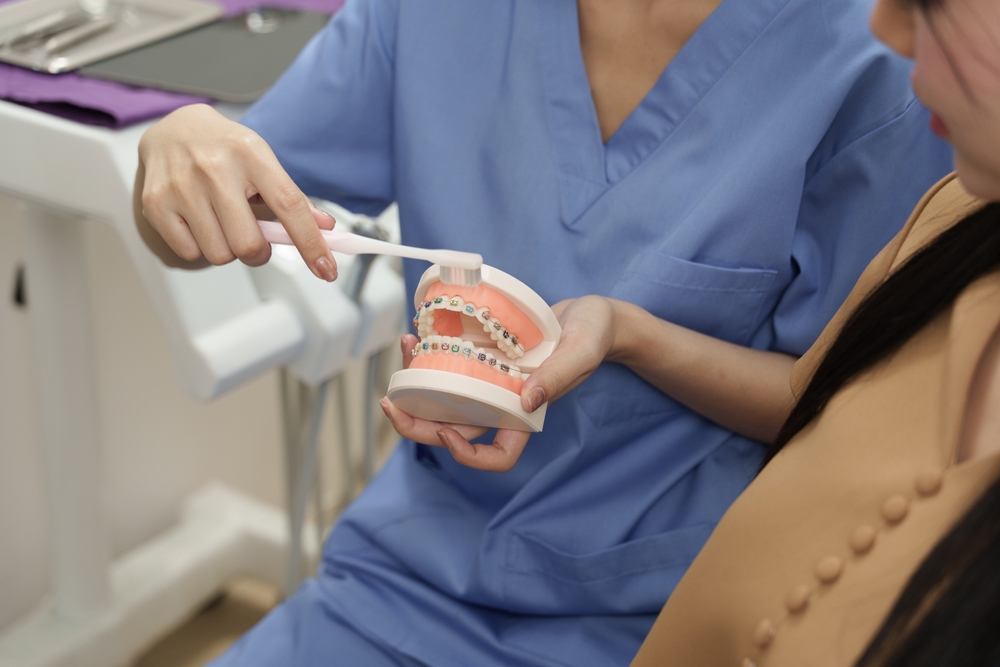
Misconceptions about orthodontic treatment can influence when people seek care, which appliances they consider, and how they maintain their results. Ashraf Dentistry…
Read article →
As winter settles in, water breaks can quietly disappear from the day. A bottle that was always within reach in summer may…
Read article →
A strand of floss catches where it used to glide. Cold water suddenly bothers one tooth. The same space between your teeth…
Read article →Explore what the latest insights mean for your individual dental health with our team.
BOOK AN APPOINTMENT →